The Ultimate Kettlebell Boot Camp is a product sold through my own store on this site, and I earn from purchases made through my links.
One kettlebell. That is the whole gym. If you are short on space, short on time, and tired of complicated workout plans, kettlebell workouts for beginners might be the simplest way to train your whole body at home. I have been exercising for over 40 years, and I keep coming back to the same truth: the tool does not make the workout — a good plan and good form do. Here is what a beginner honestly needs to know before picking one up.
Why a Kettlebell Works So Well at Home
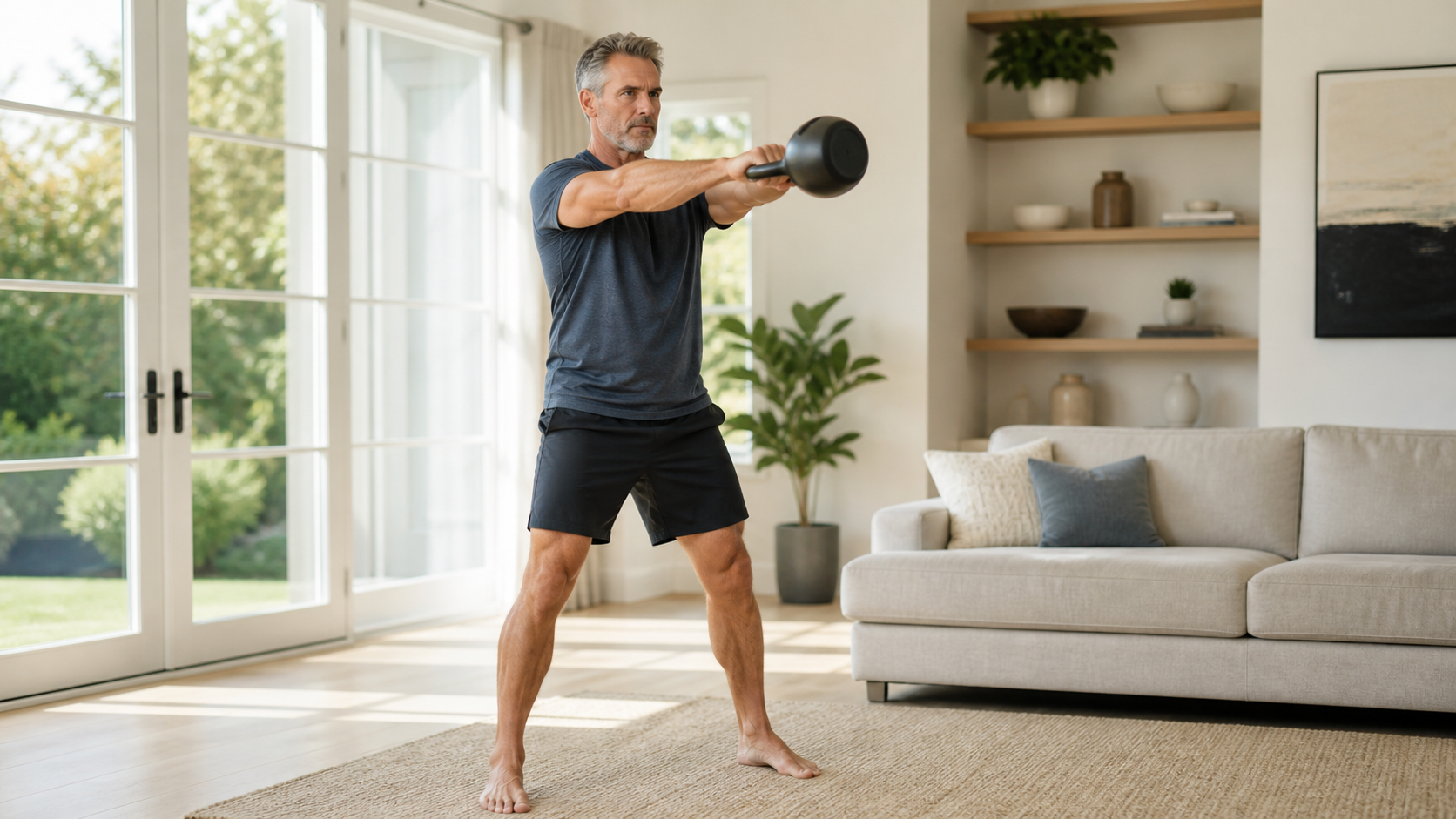
A kettlebell trains strength and cardio at the same time. A swing works your legs, back, and grip while your heart rate climbs. A press builds your shoulders. A simple carry builds the kind of everyday strength you feel carrying groceries or working in the yard. One bell, a few square feet of floor, and you have a full-body workout with nothing to set up and nothing to put away. For real people with busy lives, that simplicity is the whole point.
Start Light — Form Before Weight
This is the rule that keeps beginners safe: start lighter than you think. Kettlebell moves are skill moves. Your first job is learning the pattern — the hip hinge, the brace, the breathing — with a weight that lets you move perfectly. Most men do well starting around 25 to 35 pounds for two-handed work, most women around 15 to 25, and lighter still for presses. If your form falls apart, the bell is too heavy. There is no prize for rushing this. Good form now means steady progress for years.
What Beginners Should Actually Train
Forget the fancy flows you see online. A beginner needs a short list done well: the deadlift-style hinge, the goblet squat, the press, the row, and the carry. Master those and you have trained every major muscle group with one tool. Two or three sessions a week, twenty to thirty minutes each, is a real program — especially paired with daily walking and the simple eating habits I talk about all over this site. Consistency with the basics beats a complicated plan you quit.
One more safety note from experience: keep your wrists straight and your shoulders packed down away from your ears on every rep, and stop the set the moment your form gets sloppy. With kettlebells, tired form is where strains come from. Film yourself on your phone now and then — it is the cheapest coach there is — and compare what you see with what the Boot Camp videos show. Small corrections early become strong habits for life.
A Simple Beginner Week With a Kettlebell
Here is how kettlebell workouts for beginners fit into a normal week without taking it over. Monday: twenty minutes of kettlebell basics — hinges, goblet squats, and carries — at a weight that feels almost easy. Tuesday: your regular walk. Wednesday: rest or an easy walk. Thursday: another twenty minutes, this time adding presses and rows. Friday: walk. The weekend: one longer walk and real rest. That is the whole structure — two short strength sessions wrapped in walking and recovery. It looks almost too simple on paper, and that is exactly why people stick with it long enough for it to work. Simple and finished beats hard and abandoned, every single week.
The Ultimate Kettlebell Boot Camp
The Ultimate Kettlebell Boot Camp is the video course I offer right here on Weight It Up for people who want the guesswork taken out: a full guided kettlebell program — the written guide plus follow-along video training — so you learn the moves the right way and progress week by week instead of random workouts from the internet. It is built for home training with minimal equipment, and like everything on this site, it skips the hype and gets straight to work.
Frequently Asked Questions
What size kettlebell should a beginner buy?
Start lighter than your ego wants: roughly 15 to 25 pounds for most women and 25 to 35 for most men for two-handed moves, lighter for presses. If your form breaks down, go lighter — form first, always.
Are kettlebell workouts good for weight loss?
They can be a strong part of it. Kettlebell training builds muscle and burns serious energy in a short time, and muscle helps you keep weight off. Paired with walking and simple eating habits, it is a complete beginner approach.
How many days a week should a beginner train?
Two or three sessions a week is plenty to start. Your body gets stronger between workouts, not during them — rest days are part of the program.
Do I need anything besides one kettlebell?
No. One bell, a small clear space, and a plan are enough to begin. The Boot Camp shows you how to build from there as you get stronger.
Keep Reading
No-Excuses Exercises You Can Do at Home
Walking: The Simplest Exercise That Works
Visit the Shop