This post is about my own story and mentions my own book, The Mortgage Playbook. This is my own book, written and sold by me. When you buy through a link on this page, you are buying directly from the author.
You track your gym progress by keeping a simple, steady record of what you actually do—your workouts, your steps, and what you eat—so you can see whether you are moving toward your goals instead of guessing. The key is to record information you can realistically maintain and review it often enough to notice useful patterns.
You do not need an advanced spreadsheet, a collection of gadgets, or perfect calorie calculations. For most beginners, a short and consistent record is more useful than a complicated system that gets abandoned after a few days.
Why Tracking Your Fitness Can Be Helpful
It is easy to forget what happened during a workout last week. You may remember that you exercised, but not which weights you used, how many repetitions you completed, or how the session felt.
A written record gives you something concrete to review. It can show whether you are exercising consistently, gradually changing your workouts, or struggling with a particular part of your routine.
Tracking also helps separate facts from feelings. One difficult workout does not necessarily mean that your overall effort has stalled. Likewise, one energetic session does not provide the full picture. Looking at several entries gives you better context.
Decide What Progress Means to You
Before choosing what to record, decide what you want your fitness routine to support. Your goal might be completing regular gym visits, improving a particular exercise, walking more often, or becoming more aware of everyday food choices.
Keep the goal personal and realistic. Someone who wants to build a consistent exercise habit may track attendance and workout completion. Someone focused on strength may pay closer attention to exercises, repetitions, and weights.
A narrow goal is usually easier to monitor than a vague statement such as “get fit.” For example, “complete my planned workouts this month” gives you something specific to review without promising a particular physical result.
Practical Steps for Tracking Your Activity
The following approach is general beginner guidance rather than a description of any paid product’s internal material. Adapt it to your routine and avoid collecting information that you will never use.
- Choose a convenient recording tool. A notebook, phone note, calendar, or basic spreadsheet can work. Select the option you are most likely to open immediately after a workout.
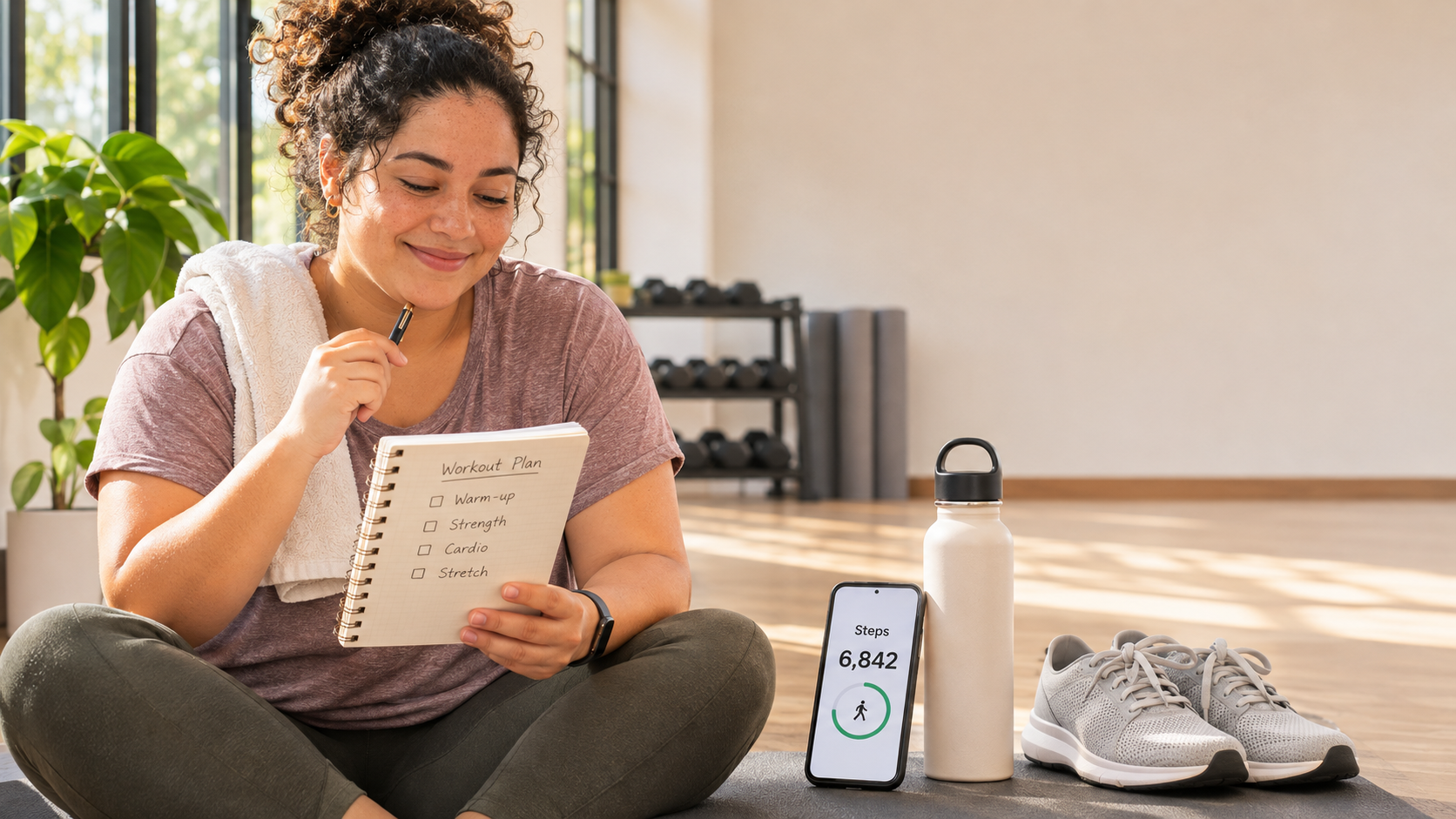
- Record the basic workout details. Note the date, exercises, sets, repetitions, weight used, and any cardio activity. You can also add a brief comment about how the session felt.
- Keep daily movement in context. If steps matter to your goal, record the number shown by your phone or wearable device. Treat it as a useful estimate rather than a judgment about whether the day was good or bad.
- Note food choices at a manageable level. Depending on your goal, this could mean logging meals, ingredients, portions, or estimated calories. Avoid adding so much detail that recording becomes stressful or impractical.
- Review your entries regularly. Look for consistency, missed sessions, repeated difficulties, and gradual changes. Use what you notice to make modest, sensible adjustments.
Tracking should support your routine rather than take it over. If a detailed log feels overwhelming, reduce the number of items you record. A simple log you maintain is more useful than a perfect template you avoid.
What a Simple Workout Entry Might Look Like
Imagine that a beginner completes a short gym session involving a warm-up, several resistance exercises, and a walk. The entry might include the date, the exercise names, the weights and repetitions completed, the walking time, and one sentence about the overall effort.
For example, the person might note that one exercise felt comfortable but another became difficult during the final set. At the next session, that note provides context when choosing whether to keep the same weight or make a small adjustment.
This type of entry does not need to be polished. Its purpose is to help you remember what happened and compare it with future sessions.
How to Handle Steps and Calorie Counting
Daily step tracking can be confusing because movement naturally changes from one day to another. Work, weather, travel, family responsibilities, and rest days can all affect the number. Instead of reacting strongly to one day, look at your broader pattern.
Calorie counting can also feel more precise than it really is. Portion estimates, recipes, labels, and tracking tools may differ. If you choose to count calories, use the information consistently and treat it as an estimate rather than an exact measurement.
You may prefer to begin with a basic food record before deciding whether detailed numbers are helpful. The best level of detail is one that gives you useful awareness without making everyday meals feel needlessly complicated.
Common Tracking Mistakes to Avoid
Trying to record everything
Too many categories can turn a helpful habit into a time-consuming task. Start with information directly related to your current goal. You can add or remove details later.
Comparing your numbers with someone else
Another person may have different experience, responsibilities, abilities, and goals. Your own previous entries usually provide more relevant context than someone else’s workout log or step total.
Changing the plan after every workout
A single session can be affected by sleep, stress, schedule changes, or equipment availability. Review a broader pattern before deciding that your routine needs major changes.
Treating missed entries as failure
Forgetting to log a meal or workout does not erase your previous effort. Resume with the next entry instead of trying to reconstruct every missing detail.
About the Fitness Tracking Downloadable Guide
Fitness Tracking is a downloadable guide created for real people who feel confused by calorie counting and daily step tracking but still want to stay on top of their fitness goals and diet plans. It may appeal to beginners who want more guidance on the general topic of fitness tracking without approaching it as an expert athlete.
A free Fitness Tracking report is also available from the product’s signup page. This gives interested readers an opportunity to learn more about the topic and decide whether the full downloadable guide fits their needs.
Fitness information should always be considered in light of your individual circumstances. This guide is not medical advice. Check with your own doctor or another qualified professional before beginning a new exercise routine, changing your diet, or making decisions related to a health concern.
Conclusion
To track your gym progress effectively, focus on consistency rather than complexity. Record the workouts you complete, keep relevant notes about steps and food, and review the information for patterns. Your record does not have to be perfect to be useful.
Choose a method that fits naturally into your day. When tracking is easy to maintain, it can help you make more informed choices instead of relying on memory or guesswork.
Frequently Asked Questions
How often should I record my workouts?
Recording the details shortly after each workout can make them easier to remember. If that is not practical, choose another consistent time that fits your routine.
Do I need a fitness watch to track daily steps?
No. A fitness watch can be convenient, but many phones also estimate steps. You can also track walking time or distance if a step count is not available or useful to you.
Do I have to count every calorie?
No. Some people choose detailed calorie tracking, while others keep a simpler food record. Use an approach that matches your goals and feels manageable, and consult a qualified professional if you need personalized dietary guidance.
How soon should I expect to notice progress?
There is no universal timeline. Fitness experiences vary according to the person, routine, consistency, goals, and many other factors. Focus on reviewing your own records without expecting guaranteed results.
Where can beginners learn more about fitness tracking?
Beginners who want additional guidance can explore the downloadable Fitness Tracking guide and the free Fitness Tracking report offered through its signup page.
If it sounds suitable for your needs, you can get the Fitness Tracking guide here for $27; if you purchase through this affiliate link, I may earn a commission.
Keep Reading
The book: Stay On Track! — The Mindset for Weight Loss That Lasts — Theo’s mindset book, in our Shop.