This post is about my own story and mentions my own book, The Mortgage Playbook. This is my own book, written and sold by me. When you buy through a link on this page, you are buying directly from the author.
You do bodyweight exercises at home by using your own body weight as resistance, so you can train without joining a gym or buying expensive equipment. The best approach is to start with movements that suit your current ability, focus on good control, and gradually increase the challenge as you become more comfortable.
This style of training can be a practical option for beginners, busy business owners, parents, travelers, and anyone who prefers the privacy of exercising at home. You do not need a perfect workout space or an advanced fitness background. You need a safe area, a realistic plan, and a willingness to build consistency over time.
What Is Bodyweight Training?
Bodyweight training uses your body as the main source of resistance. Instead of relying on machines, barbells, or a large collection of equipment, you work against gravity and adjust how a movement is performed to change its difficulty.
That flexibility is one reason it can work well at home. A movement can often be made more manageable by reducing its range or using extra support. It may be made more challenging by improving control, increasing the range, changing your position, or performing more quality repetitions.
This does not mean every movement is appropriate for every person. Your starting point should reflect your current ability, mobility, available space, and personal circumstances. If you have an injury, health concern, or uncertainty about changing your activity level, check with your own doctor or another qualified professional first.
Why Train at Home?
Home training removes several common barriers. There is no commute, no need to learn unfamiliar gym machines, and less pressure to compare yourself with other people. You can train in familiar surroundings and fit activity into the time and space you actually have.
It can also make starting feel less complicated. You do not have to wait until you own the ideal equipment or find the perfect facility. A clear section of floor and suitable clothing may be enough for many types of bodyweight movement.
However, convenience does not automatically create consistency. It still helps to decide when and where you will train, remove distractions, and follow a sensible structure rather than choosing movements at random.
How to Start Bodyweight Exercises at Home
1. Decide what you want from your training
Begin with a simple, realistic purpose. You might want to become more active, improve general strength, move with better control, or establish a regular fitness habit. A clear purpose makes it easier to choose an appropriate approach and notice whether you are making progress.
Avoid judging success only by appearance or dramatic short-term changes. Improvements in consistency, movement quality, confidence, and the ability to handle a suitable challenge can also be useful signs of progress.
2. Prepare a safe training area
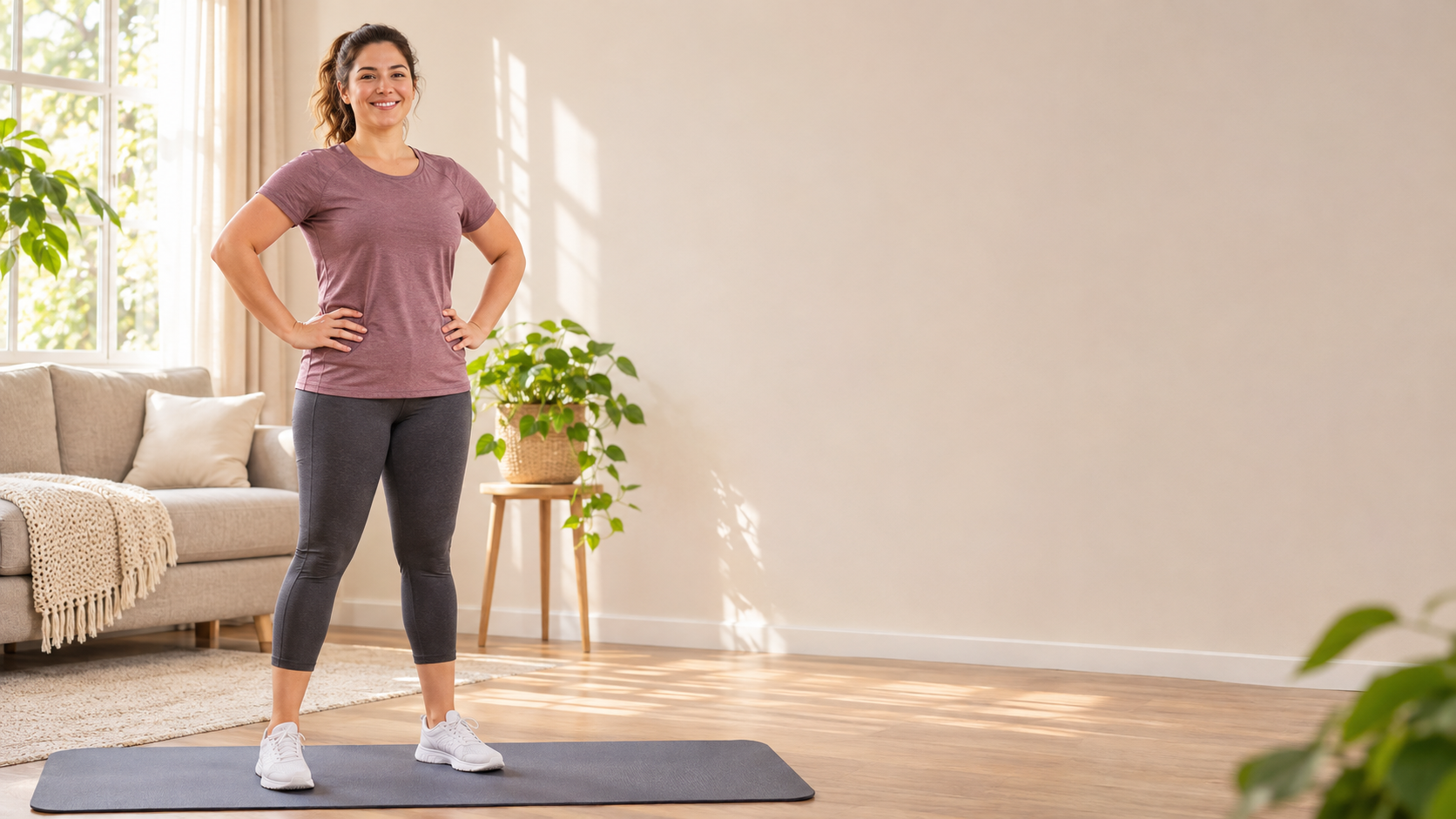
Choose a space where you can move without hitting furniture, slipping, or stepping on clutter. Check the floor, allow enough room around you, and make sure any surface you use for support is stable.
You do not need a dedicated home gym. A small living room, bedroom, office, or sheltered outdoor area may work, depending on the movements you plan to perform. Good lighting and comfortable ventilation can also make the experience more pleasant.
3. Start below your maximum ability
A common beginner mistake is treating the first session like a test. Starting with maximum effort can make it harder to concentrate on control and may leave you reluctant to train again.
Instead, begin at a level that lets you move steadily and maintain a comfortable technique. You should be able to pay attention to your position rather than rushing simply to finish. Stop if something causes pain, dizziness, or unusual discomfort, and seek appropriate professional advice when needed.
4. Use a balanced approach
A useful home-training approach should consider the whole body rather than repeatedly focusing on one favorite area. Think in broad movement categories, such as actions involving the lower body, upper body, core stability, and general mobility.
This does not require a complicated routine. The goal is to avoid creating a plan based only on whatever feels easiest or most familiar. Beginners may find it helpful to use a reputable guide that organizes the subject clearly instead of trying to assemble disconnected advice from many sources.
5. Progress one factor at a time
Progress does not always mean moving faster or doing as much as possible. For example, you might first improve how smoothly you complete a movement. Later, you could use a slightly greater range, add a small number of controlled repetitions, reduce unnecessary support, or move to a more demanding variation.
Changing one factor at a time makes it easier to understand how your body responds. It also helps prevent your sessions from becoming difficult simply for the sake of being difficult.
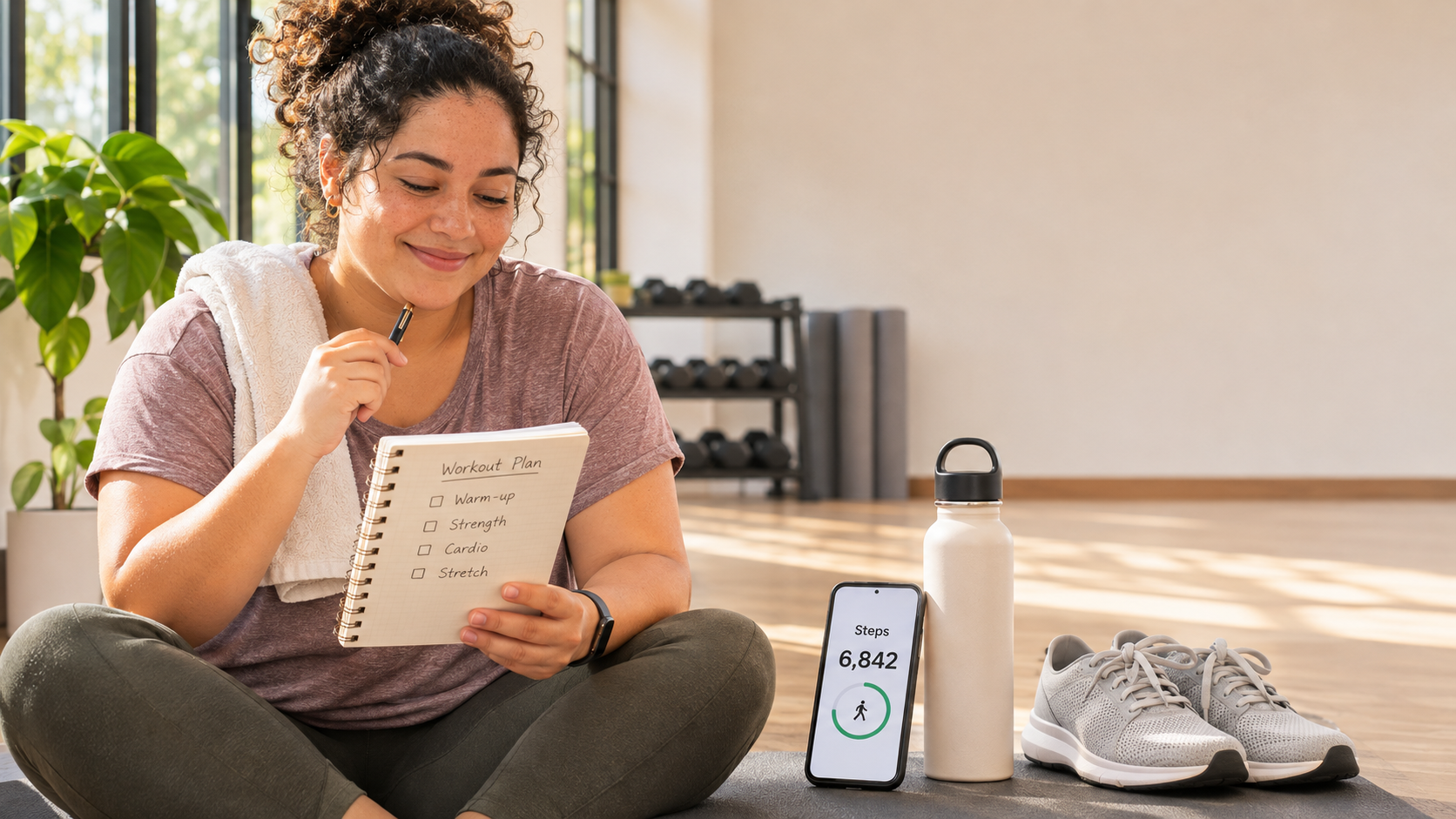
6. Keep a simple record
Write down what you completed and how manageable it felt. Your record does not need to be detailed. A few notes about the variation used, your level of control, and any discomfort can help you make better decisions next time.
Tracking also makes gradual improvement easier to notice. Without a record, it is common to forget where you started or increase the challenge too quickly.
How to Make Home Training Easier to Maintain
Choose a time that fits your real life rather than an imaginary perfect week. For one person, that may be before work. For another, it may be during a quiet period in the afternoon. The most useful choice is one you can repeat without regularly disrupting important responsibilities.
It also helps to reduce setup time. Keep your training area clear when possible, have suitable clothing ready, and decide what you will do before the session begins. These small preparations reduce the chance of spending your available time searching for ideas.
Remember that consistency does not require perfection. A missed session does not erase previous effort. Return to your plan when you can instead of trying to compensate with excessive activity.
About the Bodyweight Workouts Downloadable Guide
Bodyweight Workouts is a downloadable guide about bodyweight training at home. It is intended for real people who want to work toward better general fitness without stepping into a gym or investing in expensive equipment.
The main appeal is organization. Beginners often understand that home exercise is possible but feel unsure about how to turn that idea into a more structured approach. A downloadable resource can provide a central reference that is easier to revisit than scattered videos, social posts, or saved articles.
A free BodyWeightTransform report is also available from the product’s signup page. This gives interested readers an opportunity to learn more through the official page before deciding whether the full guide fits their needs.
As with any fitness resource, the guide cannot guarantee a particular outcome. Results and experiences vary based on factors such as starting ability, consistency, effort, recovery, and individual circumstances. It is educational fitness content rather than medical advice.
What to Look for in a Home-Training Resource
A useful beginner resource should be understandable, practical, and appropriate for training in a normal home environment. It should help reduce confusion rather than overwhelm you with unnecessary complexity.
Before buying any guide, consider whether its format suits how you learn. Some people like having downloadable material they can read at their own pace. Others prefer in-person instruction, especially when they need individual feedback or movement modifications.
Also consider your limitations honestly. If you are unsure whether independent exercise is suitable for you, speak with your doctor or an appropriately qualified fitness professional before starting.
Conclusion
Doing bodyweight exercises at home can be a simple way to make fitness more accessible. Start with a safe space, choose an appropriate level, focus on controlled movement, and increase the challenge gradually. A repeatable approach is usually more useful than chasing an exhausting session or an unrealistic transformation claim.
You can create your own general plan, seek individual professional support, or use an organized downloadable resource. The right choice is the one that matches your ability, preferences, and circumstances while helping you train responsibly.
Frequently Asked Questions
Do I need equipment for bodyweight training?
Your own body provides the main resistance, so many people can begin without specialized workout equipment. You still need a clear, safe area, and any household surface used for support must be stable.
Is bodyweight training suitable for complete beginners?
It can be suitable for many beginners because movement difficulty can often be adjusted. Start at a manageable level and seek professional guidance if you are unsure about technique, limitations, injuries, or health concerns.
How often should I train at home?
There is no single frequency that suits everyone. Your appropriate schedule depends on your starting level, training intensity, recovery, goals, and other activities. Begin conservatively and allow time to recover rather than assuming more is always better.
Can bodyweight exercise replace a gym membership?
That depends on your goals and preferences. For people focused on convenient general fitness, home training may be a practical option. People with specialized performance or equipment-based goals may prefer a gym or professional facility.
What is the BodyWeightTransform report?
It is a free report available from the Bodyweight Workouts signup page. Visit the official product page to review the current information and decide whether you want to sign up for it.
Affiliate disclosure: If you purchase through the following link, I may earn a commission at no additional cost to you. If you want an organized downloadable guide designed for real people training without a gym or expensive equipment, learn more about Bodyweight Workouts for $27 at the official Bodyweight Workouts page.
Keep Reading
The book: No Gym? No Problem! — Simple At-Home Workouts for Real People — Theo’s at-home workout book, in our Shop.
This is general information, not medical advice. Talk to your doctor about what’s right for you.