This post is about my own story and mentions my own book, The Mortgage Playbook. This is my own book, written and sold by me. When you buy through a link on this page, you are buying directly from the author.
This post is about my own story and mentions my own book, Weight It Up!. This is my own book, written and sold by me. When you buy through a link on this page, you are buying directly from the author.
You lose weight safely by keeping it simple and steady: small, realistic changes to how you eat and move that a real person can stick with, instead of extreme plans that fall apart in a week.
That is the plain answer. It may not sound dramatic, but most everyday people do not need more drama around food, movement, or body weight. They need a reasonable place to begin.
Weight loss is personal, and no single approach is right for everyone. Your health, schedule, preferences, budget, and responsibilities all matter. This article offers general wellness information, not medical advice. Check with your own doctor or another qualified health professional about what is appropriate for you, especially if you have health concerns, take medication, are pregnant, or have a history of disordered eating.
Why Simple Changes Can Be Easier to Keep
Extreme plans often ask you to change everything at once. That can mean a new shopping list, a strict daily schedule, hard workouts, complicated rules, and the feeling that one imperfect day has ruined everything.
Real life rarely works that neatly. Work runs late. Family needs your attention. Energy changes from one day to the next. Sometimes the food you planned is not available. A useful approach needs enough flexibility to survive normal life.
Keeping things simple does not mean you are not taking your goal seriously. It means you are choosing changes that have a fair chance of fitting into your actual routine.
Start With Your Real Life
Before making changes, look honestly at how your days usually work. Do not build your starting point around an imaginary week in which you have unlimited time, energy, and motivation.
For example, someone with a busy morning may not want to prepare an elaborate breakfast. A parent may need meals the household can share. A person who has not exercised for a long time may find a short, comfortable walk more realistic than an intense training schedule.
The best starting point is not the one that looks most impressive. It is the one you can repeat without making your whole life revolve around it.
Choose One Manageable Change
Pick one small action you feel ready to practice. You might add a piece of fruit to a meal, drink water more regularly, take a brief walk, or pause before having another serving. These are general examples, not rules that everyone must follow.
Give the change some time before adding more. This helps you learn whether it genuinely fits your routine. If it does not, adjust it rather than treating the experience as a personal failure.
Make the Helpful Choice More Convenient
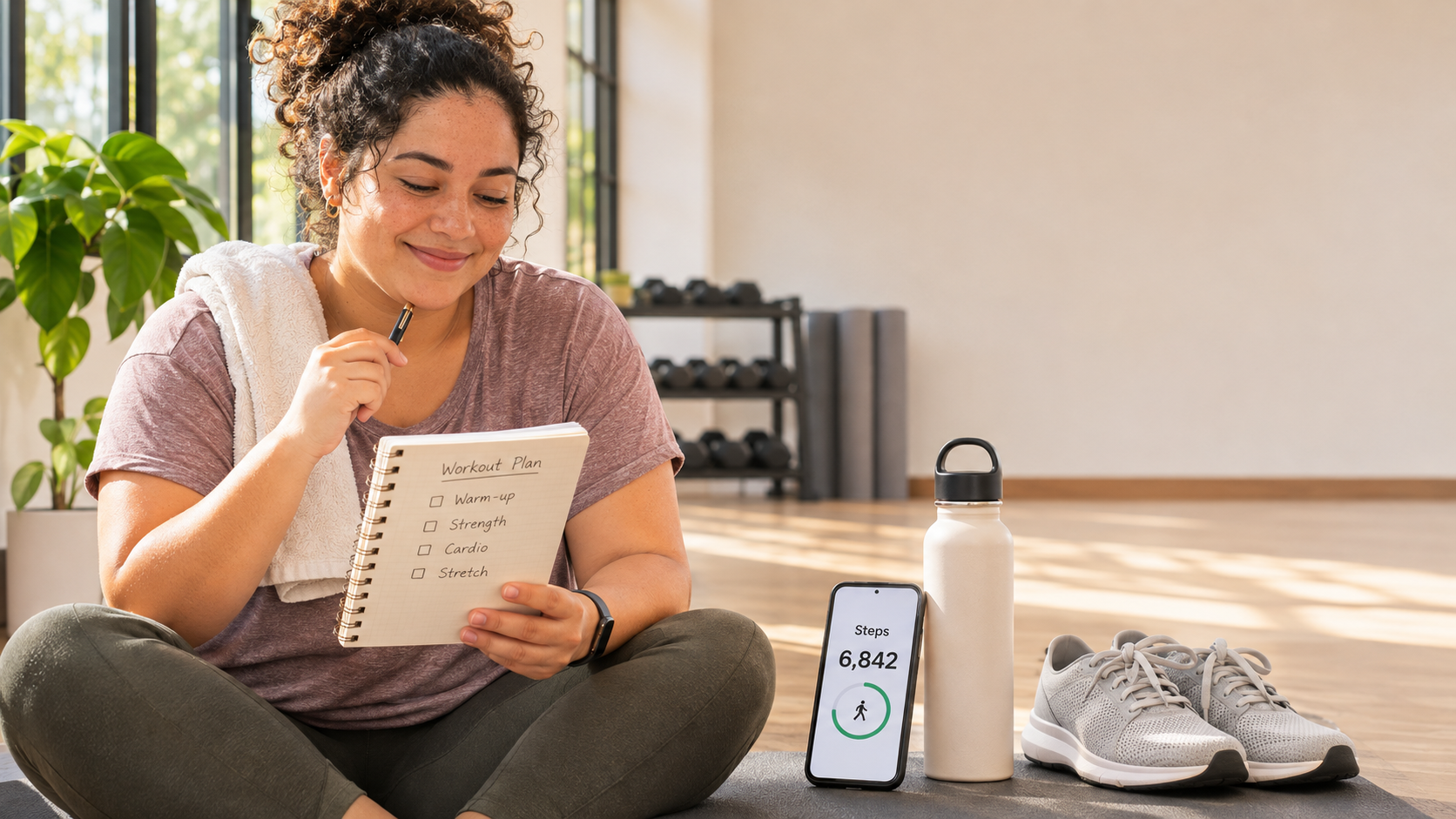
Convenience affects everyday decisions. If you want to move more, keep comfortable shoes where you can see them. If you want an easy snack available, put one somewhere practical. If evenings are hectic, think ahead about a few uncomplicated meal options.
You do not need to organize your life perfectly. The goal is simply to remove a little friction from the choice you want to make more often.
Avoid the All-or-Nothing Trap
One of the hardest patterns for beginners is believing that a day must be perfect to count. A missed walk, an unplanned meal, or a busy weekend can then feel like proof that the whole effort has failed.
But one choice is only one choice. You can return to your usual intention at the next reasonable opportunity. There is no need to punish yourself, skip meals to compensate, or force an unusually hard workout.
If you want to lose weight safely, it helps to think in terms of an overall direction rather than perfect daily performance. Consistency can include imperfect days.
Pay Attention Without Becoming Obsessed
Some awareness can help you notice patterns. You might briefly note when you feel most hungry, which meals leave you comfortable, or when movement fits naturally into your day.
This does not have to become detailed tracking. If numbers or food logging make you anxious or overly focused, step back and speak with a qualified professional. Your emotional well-being matters too.
It can also help to notice progress that is not tied to a scale. Perhaps a routine feels easier, you are cooking at home more often, or you are becoming more comfortable with regular movement. These observations do not guarantee a particular result, but they can show whether your habits are becoming more workable.
Be Careful With Fast or Extreme Claims
Bold promises can be appealing when you feel frustrated. However, a plan that demands severe restriction, exhausting exercise, or a long list of rigid rules may not be a sensible starting point.
Be cautious when anyone guarantees a specific result or suggests that the same method works for every person. No book, product, meal pattern, or exercise routine can honestly promise how an individual body will respond.
If an idea makes you feel unwell, creates pain, or raises concerns, stop and get personal guidance. Your doctor can help you consider your health history and individual needs.
About Weight It Up!
I wrote Weight It Up! – Simple Weight Loss for Real People for beginners and everyday people who want a plain, realistic starting point. It is not presented as a medical program, a miracle solution, or a promise of results.
The book is for the person who feels overwhelmed by complicated weight-loss messaging and wants something written in normal, approachable language. My intention is to offer a grounded starting place rather than add more pressure.
I also want to be clear that a book cannot replace individual medical advice. It does not know your health history, and neither does a general blog post. Please speak with your own doctor about what is right for you.
A Simple Example of a Realistic Beginning
Imagine that you want to be more active but currently have little spare time. An all-or-nothing approach might tell you that only a long, intense workout matters. A more realistic beginning could be choosing a short period of comfortable movement that fits around your existing day.
After trying it, you can ask a few practical questions. Did it fit? Did it feel manageable? Would a different time work better? The point is not to judge yourself. It is to learn what can work in your life.
The same thinking can apply to food. Instead of trying to rebuild every meal overnight, you can make one ordinary choice easier and see how it goes. Small adjustments may feel less exciting than a complete overhaul, but they are often more compatible with everyday responsibilities.
Conclusion
To lose weight safely, begin with patience, realistic expectations, and respect for your own circumstances. Choose manageable changes, expect imperfect days, and avoid anyone who guarantees an outcome.
You do not have to prove your commitment through extremes. A calm starting point is still a real starting point. Keep your focus on general well-being, and ask your doctor for personal guidance when you need it.
Frequently Asked Questions
Is Weight It Up! medical advice?
No. It is a general, beginner-friendly book for everyday people. It is not medical advice and does not replace guidance from your doctor or another qualified health professional.
Who is Weight It Up! for?
It is for real people who want a plain, realistic starting point and feel overwhelmed by extreme or complicated weight-loss messages.
Does the book guarantee weight loss?
No. Individual results cannot be guaranteed, and the book does not promise a particular amount of weight loss or a specific outcome.
Should I talk to my doctor before trying to lose weight?
It is sensible to check with your doctor about what is appropriate for your health and circumstances, particularly if you have medical concerns, take medication, are pregnant, or have a history of disordered eating.
If a plain, realistic starting point sounds right for you, you can learn more and buy Weight It Up! ($19) directly from me in the Weight It Up! Shop.